


When NASA first published its “Clean Air Study” in 1989, it recommended the use of several indoor plants to remove toxic agents from the air. If you are wondering why NASA was heading the study, it’s because researchers were originally looking at ways to improve the indoor air quality inside of space stations, and figured their findings were relevant to other indoor areas as well. In general, when NASA has something important to say, it’s most likely a good idea to listen — those people went to space, they know a thing or two.
Sick building syndrome and plants
There is a phenomenon often referred to as “sick building syndrome” which falls under the category of syndromes that are impossible to prove and impossible to disprove based on currently available data. Basically, this syndrome involves the onset of symptoms such as headaches and dizziness that occur when a person spends time in a particular building. The symptoms then disappear when the person leaves that particular building.
The theory is that the person is reacting to toxic agents in the atmosphere. As with everything else in health, some people are more susceptible to the symptoms than others. While it is very difficult to prove cause and effect, in this case, it would be difficult to find an expert that does not agree that the quality of the air we breathe (indoors or out) has an impact on our moods, energy levels, comfort and overall health.
As a result, NASA recommends placing one toxic agent-filtering plant for every 100 square feet of home or office space in order to keep air quality at its utmost finest. This is recommended for anyone, whether they are experiencing symptoms of sick building syndrome or not.
Here are the toxic agents that contribute to poor indoor air quality, according to NASA.
Trichloroethylene
Commonly found in paints, paint remover, varnish or other substances you might put on your walls or floor. Also found in printing inks.
- Benzene: Used to make plastics, detergents and pesticides, but is also found in vehicle exhaust, glue and paint. If tobacco is smoked inside a home, benzene will be in the air as well.
- Xylene: Commonly found in homes with leather furniture, but also found in vehicle exhausts, paint and cigarette smoke.
- Ammonia: Often found in cleaning products, specifically window cleaners and floor waxes. Commonly found in fertilizers as well.
- Formaldehyde: Commonly found in tissue paper, paper towels, napkins and other materials you often hold up to your mouth and nose.
Most plants will remove at least one or two of these toxic agents from indoor locations, but some are more efficient than others. Here are nine indoor plants that can help improve the air quality inside of your home.
1. Peace lilies
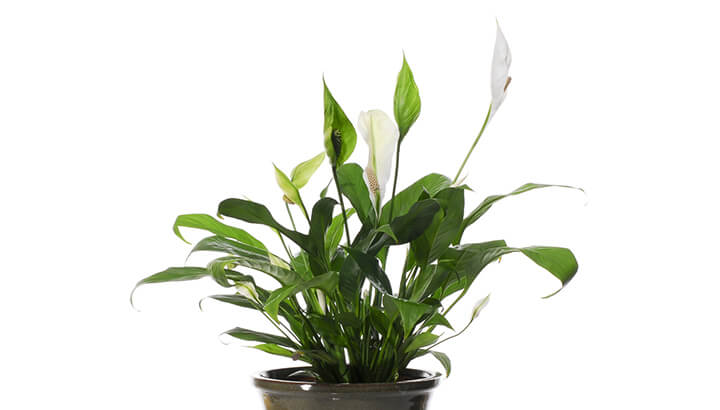
Peace lilies are one of only two plants that are effective at removing all five of the toxic agents from indoor air, as mentioned on NASA’s list. They are naturally a tropical plant but do not require very much sunlight to live. These evergreen lilies can be placed in the shade and watered once a week.
Unfortunately, while these plants are great at improving indoor air quality, they are also mildly toxic to dogs and cats. They are not recommended for homes with pets.
2. Hardy garden mum
These colorful perennials will not only make your home look as though you have just stepped into a florist’s office, but it is the only other plant on the NASA study found to be effective at removing all five toxic agents. Water them two to three times a day and fertilize them once a month.
Unfortunately, as with the peace lilies, the ASPCA has listed the hardy garden mum as being toxic to dogs and cats.
3. Bamboo palm
Bamboo palms are native to the tropical Americas, but many people put them in their homes to help purify the air. While bamboo palms only filter two out of NASA’s five identified toxic agents, they are quite effective at it. Bamboo palms remove both formaldehyde and xylene. Unlike other house plants, bamboo palms are not harmful to have around pets.
4. Snake plant
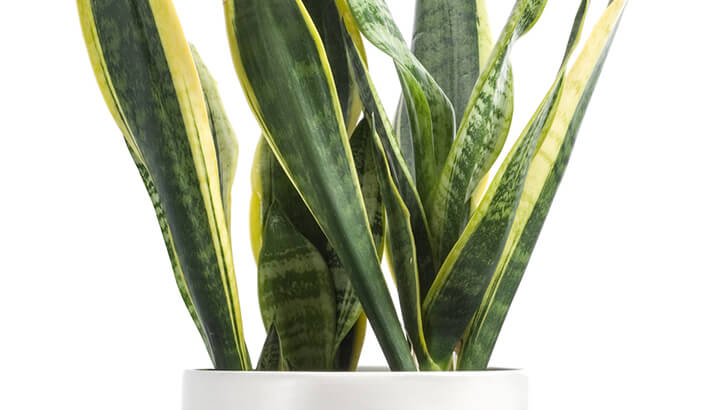
The snake plant is one of the most notable “bedroom plants,” as it is quite effective at converting carbon dioxide to oxygen. This gives your bedroom a little oxygen kick while you sleep. But snake plants, which are not made from or by real snakes, are effective at removing four out of the five toxic agents, only missing out on ammonia. They are considered harmful to pets, however.
5. Devil’s ivy
Devil’s ivy is great at purifying your air, but also great at poisoning those who ingest it. Benzene, formaldehyde and xylene are all removed from the air by devil’s ivy. However, take care with this plant around pets, children or adults prone to eating houseplants.
6. Boston fern
The good old Boston fern is a popular houseplant, as it is safe for dogs and cats to eat (though you might not want them to do that). It is also great for improving the quality of air in your home. Specifically, this fern is effective at reducing levels of formaldehyde and xylene.
7. Aloe vera
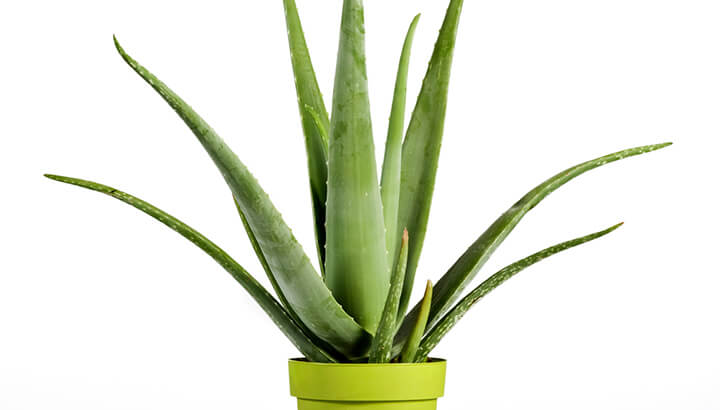
In addition to being great for your skin, aloe vera can filter out benzene and formaldehyde. Unfortunately, aloe vera is toxic to both humans and pets if ingested.
8. Red-edged dracaena
Sometimes referred to as “the song of India,” this plant is commonly found around the coastal areas of the Indian Ocean. It is effective at filtering benzene, formaldehyde, trichloroethylene and xylene. It is also toxic to pets, however.
9. Chinese evergreen
Native to tropical areas of Asia, Chinese evergreens will filter out benzene and formaldehyde, but are also toxic to pets.
While the above-listed plants are some of the best at filtering indoor air pollution, they are certainly not the only ones. The important part to remember is one plant per 100 square feet of indoor space to keep you feeling alert and in a great mood.
— Ian Carey


Spider plants are another plant thats good for air quality, as is al types of ivy. People only need go to nature (GODS) not mans in order to find safe alternatives.
I am sorting out relevant information about gate io recently, and I saw your article, and your creative ideas are of great help to me. However, I have doubts about some creative issues, can you answer them for me? I will continue to pay attention to your reply. Thanks.
Your article made me suddenly realize that I am writing a thesis on gate.io. After reading your article, I have a different way of thinking, thank you. However, I still have some doubts, can you help me? Thanks.
At the beginning, I was still puzzled. Since I read your article, I have been very impressed. It has provided a lot of innovative ideas for my thesis related to gate.io. Thank u. But I still have some doubts, can you help me? Thanks.
Thank you very much for sharing. Your article was very helpful for me to build a paper on gate.io. After reading your article, I think the idea is very good and the creative techniques are also very innovative. However, I have some different opinions, and I will continue to follow your reply.
Thank you very much for sharing. Your article was very helpful for me to build a paper on gate.io. After reading your article, I think the idea is very good and the creative techniques are also very innovative. However, I have some different opinions, and I will continue to follow your reply.
Elitepipe Plastic Factory’s HDPE pipes offer excellent resistance to chemicals, abrasion, and environmental stress, making them ideal for a wide range of applications. Elitepipe Plastic Factory
The factory’s commitment to innovation is reflected in their continuous research and development efforts to enhance the design and functionality of their HDPE and uPVC fittings. Elitepipe Plastic Factory
Pretty! This has been a really wonderful post. Many thanks for providing these details.
I do not even understand how I ended up here, but I assumed this publish used to be great
Good post! We will be linking to this particularly great post on our site. Keep up the great writing
I just like the helpful information you provide in your articles
I just like the helpful information you provide in your articles
This is really interesting, You’re a very skilled blogger. I’ve joined your feed and look forward to seeking more of your magnificent post. Also, I’ve shared your site in my social networks!
I’m often to blogging and i really appreciate your content. The article has actually peaks my interest. I’m going to bookmark your web site and maintain checking for brand spanking new information.
This is really interesting, You’re a very skilled blogger. I’ve joined your feed and look forward to seeking more of your magnificent post. Also, I’ve shared your site in my social networks!
You’re so awesome! I don’t believe I have read a single thing like that before. So great to find someone with some original thoughts on this topic. Really.. thank you for starting this up. This website is something that is needed on the internet, someone with a little originality!
Hello, Neat post. There’s an issue together with your site in internet explorer, would check this텶E still is the marketplace chief and a large element of other folks will leave out your magnificent writing due to this problem.
I don’t think the title of your article matches the content lol. Just kidding, mainly because I had some doubts after reading the article.
Thank you for your sharing. I am worried that I lack creative ideas. It is your article that makes me full of hope. Thank you. But, I have a question, can you help me?
I was suggested this web site by my cousin. I’m not sure whether this post is written by him as no one else know such detailed about my trouble. You are incredible! Thanks!
What i don’t understood is in reality how you’re now not really a lot more smartly-favored than you might be now. You’re very intelligent. You understand therefore significantly in terms of this topic, produced me personally believe it from a lot of numerous angles. Its like women and men are not interested except it is one thing to accomplish with Woman gaga! Your own stuffs outstanding. Always care for it up!
Your article helped me a lot, is there any more related content? Thanks!
Can you be more specific about the content of your article? After reading it, I still have some doubts. Hope you can help me.
Thank you for your sharing. I am worried that I lack creative ideas. It is your article that makes me full of hope. Thank you. But, I have a question, can you help me?
Thanks for sharing. I read many of your blog posts, cool, your blog is very good.
Thank you for your sharing. I am worried that I lack creative ideas. It is your article that makes me full of hope. Thank you. But, I have a question, can you help me?
Thank you, your article surprised me, there is such an excellent point of view. Thank you for sharing, I learned a lot.
Your point of view caught my eye and was very interesting. Thanks. I have a question for you.
Can you be more specific about the content of your article? After reading it, I still have some doubts. Hope you can help me.
Your point of view caught my eye and was very interesting. Thanks. I have a question for you.
Thanks for sharing. I read many of your blog posts, cool, your blog is very good.
Can you be more specific about the content of your article? After reading it, I still have some doubts. Hope you can help me.
Can you be more specific about the content of your article? After reading it, I still have some doubts. Hope you can help me.
Your point of view caught my eye and was very interesting. Thanks. I have a question for you.
Your article helped me a lot, is there any more related content? Thanks!
Can you be more specific about the content of your article? After reading it, I still have some doubts. Hope you can help me.
You explained it in such a relatable way. Well done!
Thanks for taking the time to break this down step-by-step.
I appreciate how genuine your writing feels. Thanks for sharing.
I appreciate the honesty and openness in your writing.
I don’t think the title of your article matches the content lol. Just kidding, mainly because I had some doubts after reading the article.
Your point of view caught my eye and was very interesting. Thanks. I have a question for you.