

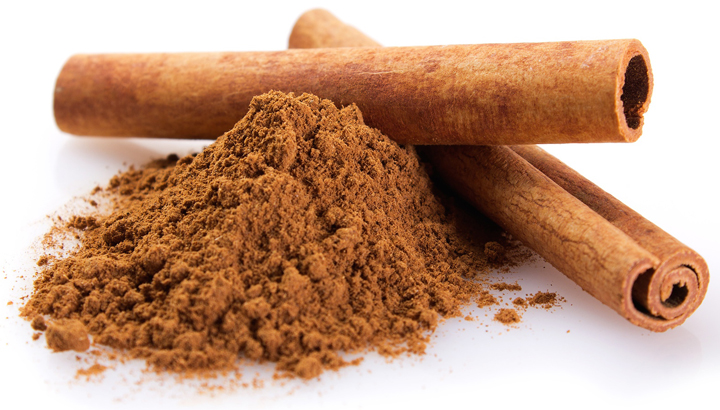
Cinnamon is a most-beloved spice the world over. There’s a reason that it plays a crucial supporting role in hundreds of desserts, savory dishes and beverages. The smell of cinnamon is so intoxicating that it’s often used in fragrance and potpourri blends, and its essential oil circulates a warm, pungent scent throughout your home.
Those who know and love cinnamon may have heard that this spice has a vast wealth of health benefits, including stabilizing blood sugar, promoting optimal oral health and potentially reducing the risk of cancer. Now, we can add another benefit to the list: cinnamon may help to boost one’s ability to learn.
A new study performed by researchers at Rush University Medical Center and published in the Journal of Neuroimmune Pharmacology tested cinnamon’s effect on cognition by administering it to two groups of mice: mice that were classified as “good learners,” and mice that were classified as “poor learners.” Results showed that the cinnamon helped the poor learners to learn more effectively.
According to Kalipada Pahan, the study’s lead researcher:
“We have successfully used cinnamon to reverse biochemical, cellular and anatomical changes that occur in the brains of mice with poor learning.”
Specifically, Pahan and his research team found that ingesting cinnamon had an effect within the hippocampus. The hippocampus is a region of the brain associated with the creation, sorting, and storing of memory. This makes it intrinsic to the learning process. Previous research has found that people who have trouble learning have less of a protein called CREB in their hippocampus, as well as more of a protein called GABRA5. CREB plays a role in memory, and GABRA5 has an effect of slowing down the brain.
When the mice in the study were fed cinnamon, their bodies metabolized it into sodium benzoate, a chemical compound which has been used to help treat brain damage. Likely because of this metabolite, the “poor learner” mice who ate cinnamon exhibited higher levels of CREB, and lower levels of GABRA5, which translated into their memory improving, and their brains functioning more quickly.
Interestingly, while the cinnamon improved learning ability in the poor learners, it did not appear to significantly impact the brains of the mice that were classified as “good learners.”
On their results, the study authors wrote:
“These results describe a novel property of cinnamon in switching poor learners to good learners via stimulating hippocampal plasticity.”
While these results were found in mice, not humans, and more research obviously needs to be done, if cinnamon was found to help humans to learn as well, it could be highly beneficial for a lot of people in more ways than one.
Dr. Pahan stated:
“This [eating cinnamon] would be one of the safest and the easiest approaches to convert poor learners to good learners… Individual difference in learning and educational performance is a global issue. We need to further test this approach in poor learners. If these results are replicated in poor learning students, it would be a remarkable advance.”
While we await results of further research on cinnamon and learning, it absolutely couldn’t hurt to get more into our diets now! The following are just a few suggestions:
- Use cinnamon in spice rubs for your favorite grass-fed meats, and fresh organic veggies, before roasting, sauteing or grilling. For savory dishes, it pairs very well with cumin, allspice, curry and cayenne pepper.
- Add a teaspoon of ground cinnamon to smoothies for a spicy, delicious kick.
- Stir a teaspoon of ground cinnamon into fresh juices.
- Stir any hot tea or coffee with a cinnamon stick, and let the flavor dissolve into your mug.
- Add cinnamon liberally to healthy dessert recipes.
What’s your favorite way to enjoy cinnamon?
— Tanya Rakhmilevich


Not all cinnamon that is available is true cinnamon. I wish this article addressed that concern, because Ceylon is the only real cinnamon, and other cassia ( Saigon ) cinnamon is “fake”. It is a good flavor substitute, but it isn’t medicinal.
The One that goes ‘snotty’ when you put it in any liquid, is that fake cinnamon?
Cassia can have serious side effects. it has coumarin in it, which is a blood thinner. So, if someone has any kind of bleeding disorder or is on an anti-coagulant, it is advised not to use it.
If you look at the link above (Pahan) they mention the different cinnamons …..
Cinnamon also may aid against Parkinson’s disease
Cinnamon has been a sweet spot for Pahan’s research. He and his colleagues previously that cinnamon can reverse changes in the brains of mice with Parkinson’s disease.
These studies have made the researchers spice connoisseurs: They used mass spectrometric analysis to identify the purer of the two major types of cinnamon widely available in the United States — Chinese cinnamon (Cinnamonum cassia) and original Ceylon cinnamon.
“Although both types of cinnamon are metabolized into sodium benzoate, we have seen that Ceylon cinnamon is much more pure than Chinese cinnamon, as the latter contains coumarin, a hepatotoxic (liver damaging) molecule,” Pahan said.
————————————
Also sodium benzoate is a common drink preservative with a bad reputation… forms benzene if with ascorbic acid. But maybe that’s why they are so popular for the brain effect?
I have Diabetes Type II and cinnamon has helped me control my blood sugar. It works for me and I quit the Metformin the Veterans Administration had me on because I contacted this from Agent Orange Exposer. After taking the Cassia which did work for me but, it seemed kind of work so, maybe diet and exercise kept my blood sugar in control. I stopped for a while because Cassia I was told by a doctor builds up a toxicity in your liver. Then I did research and found what type is best and that was Ceylon Cinnamon however; I could not seem to locate it in stores then one day my wife and I were in a spice shop and we asked if they had any? They didn’t but could order some for us. So, we did order some Ceylon. My blood sugar is good and I make a smoothie every morning. Ceylon Cinnamon and other spices like Turmeric, Fennel Seeds, Ginger, Garlic and Cayenne Pepper all in a smoothie help with a number of my issues. It works for me and I have regular blood work done every three months and everything is good.