


We all know most processed foods are packed full of chemicals, but it’s surprising just how many of these additives are banned in other countries. Just compare the U.S. Food and Drug Administration’s (FDA) list of banned additives to that of the European Union (EU).
The difference largely comes down to two totally different approaches to food safety. While the EU puts the onus on manufacturers to prove their product is safe, the U.S. all too often opts to allow products on the market unless someone can show there’s a problem. The end result is that the FDA has approved the use of damaging chemicals. There are fat substitutes that cause diarrhea and hormones suspected of causing cancer. There are even food dyes that might be linked to birth defects and more.
So before you take another bite, check out our list of food chemicals banned in Europe but supposedly safe for Americans.
Milk contains chemicals like rBGH and rBST

Recombinant bovine growth hormone (rBGH) and recombinant bovine somatotropin (rBST) can both be commonly found in dairy products across the U.S., such as milk. These two chemicals are typically given to cows to boost their milk output. Both rBGH and rBST are so widely used in the U.S. that food manufacturers have no obligation to list them on the label. This means customers generally have no idea what they might be consuming.
So, what’s the problem? The main concern over rBGH and rBST is that they might increase cancer risks. There’s currently no scientific consensus that rBGH and rBST are linked to cancer in humans, but the European Union has banned these chemicals just to be on the safe side.
Packaged food contains olestra
When olestra first emerged in the 1990s, it was almost immediately hailed as a game changer in food manufacturing. This fat-free substance can be used to replace actual fat in junk food, making it a seemingly easy way to make snacks like packaged chips a little less unhealthy.
Unfortunately, olestra has a nasty side effect: diarrhea — and lots of it. It can also cause stomach cramps, nausea and even anal leakage. The latter is a condition where unformed stools can leak into your underwear. In other words, olestra isn’t all that fun. Nonetheless, olestra not only has FDA approval, but food manufacturers don’t even need to label for it. Olestra is banned in the EU and Canada.
Processed food contains artificial food dyes
Contrary to popular belief, not all artificial food dyes are bad for you — but some might be. For example, two common azo-dyes, Yellow 6 and Red 40, might be carcinogenic. Meanwhile, numerous artificial dyes have been linked to health issues such as organ damage and birth defects.
In the EU, dyes are heavily regulated, with blanket bans on food dyes for products aimed at babies and small children. This, combined with strict labeling for many controversial dyes means Europeans consume very few artificial colors. However, most artificial dyes, including Yellow 6 and Red 40 remain FDA approved. These colors may be in our candy, cake frosting, processed food, popcorn, soda and more. Make sure to check labels!
Soft drinks contain BVO
Brominated vegetable oil (BVO) is banned in the EU. It is suspected of being linked to heart problems in animal studies. In the U.S., it has been considered an interim food additive for decades, meaning food manufacturers can use BVO with certain limitations. There are some isolated, suspected cases of BVO being linked to bromism in humans — a serious condition that can cause symptoms ranging from mild headaches to delirium and psychosis. The most well-known case was a man who drank between two and four liters of soft drinks containing BVO every day. He reportedly became so ill he couldn’t walk.
Baked goods contain potassium bromate (bromated flour)

Another food additive that might be linked to bromism is potassium bromate. Commonly referred to as bromated flour, this stuff is often used in baked products in the U.S. The FDA allows its use, with manufacturers usually arguing the bromated flour is cooked out during baking. This means the final product shouldn’t pose a risk to humans. However, the International Agency for Research on Cancer (IARC) doesn’t quite buy this story. It lists bromated flour as a possible carcinogen. It’s also banned in the EU, Brazil and Canada.
Baked foods also contain azodicarbonamide
Another bread related additive, small amounts of azodicarbonamide are used by bakers across the U.S. with FDA approval. Although the amounts are small, critics say this additive is unnecessary and can slightly increase cancer risks. The EU hasn’t authorized its use, meaning this is another additive Americans have to worry about, but Europeans don’t.
Apples contain DPA
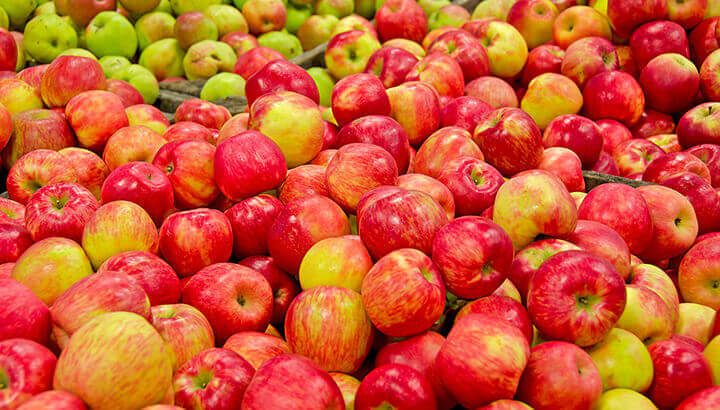
Everyone loves a nice crispy apple, but ever wonder how they get so shiny? That’s thanks to diphenylamine (DPA), a chemical commonly used to coat apples and give them a bit of a sheen. It can also help stop apples from turning black during long-term storage in cold climates. There’s some evidence this stuff is carcinogenic, though there’s no scientific consensus. As usual, the EU has erred on the side of caution and banned the use of DPA on apples and other fruits, while the FDA hasn’t.
What do you think? Should any of these chemicals be banned in the U.S. as well?
— Tamara Pearson


Where is your science?
It seems that to eat processed food is to slowly ingest a compendium of additives that will ultimately lead to a slow and painful demise. Processed food plays on our senses, to differentiate (refined sugar), to add shelf life (preservatives), and reduce manufacturing costs (antibiotics, pesticides and hormones). None of which improve the human condition in terms of health or morality.
We appear to have evolved over millennia to eat food as it is commonly found in nature (notwithstanding nature’s own defense mechanisms) and to expend energy (exercise) in procurement. If you want a healthy outcome, go ahead and vote with your $$, manufacturers will ultimately have no choice but to listen.
I wonder if DPA is the reason you can eat an apple and end up with a mouthful of skin. That didn’t happen back in the day!
Why would you demise? You’re full of preservatives!
And I wouldn’t put too much stock in voting with your wallet–look at how well it worked in health insurance: when we stopped buying health insurance because we couldn’t afford it, we got ObamaCare–a mandate to buy it, anyway.
Thanks for your reply, but this was not a comment on the elections, just a wake up call that our bodies are biological and arose from nature. Appetite is largely a sensory issue. Nutrition is what is important. Not necessarily taste. The trillions of cells in your body are all alive in some sense and get replaced on a seven year cycle. You are what you eat. And the ravages of the cumulative assault of contaminants are what age you (simply put, errors are introduced in replication).
As for Obamacare, I think it may prevail in some form because it puts the focus squarely on preventative medicine. If you think about it we have never had preventative medicine in the west, in the sense that you only go to the doctor: a) when you are sick, b) for a health exam (to find an existing problem). Logically that does not make sense.
Further, I believe that the statistic is that 1 in 4 Americans will get cancer in some form during their lives. I would assume that this generally occurs later in life. So, if every family has a loved one that contracts cancer and there is no universal system, guess what happens? You have to sell everything you own to pay for treatment. You will literally go broke watching your loved ones die. So, there has to be a better way; a symbiosis between provider and recipient.
I think that this is disgraceful and the FDA should be held accountable. The problem is that the FDA is in bed with the pharmaceutical industry which benefits from keeping us sick. Cancer is a big $$$ business.