

In our society, we spend a lot of time cleaning our homes and ourselves. While modern hygiene is great — it keeps a lot of diseases at bay — taking it too far can actually be harmful. Research shows that when we avoid dirt and rely too much on antibacterial cleaners, our immune systems may suffer.
Exposure to microbes is a good thing
On the beneficial relationship between microbes (including bacteria and viruses) and our health, microbiologist Kiran Krishnan states that between 97 and 99 percent of microbes are beneficial. Krishnan, who is also the chief scientific officer at Microbiome Lab in Illinois, further explains:
“Exposure to microbes is an essential part of being human. Most of our immune system is comprised of tissue that requires activation by the microbes we’re exposed to. The immune system requires the presence of friendly bacteria to regulate its functions. Think of the immune system as an army, with tanks and missiles but no general to lead them. That’s the role friendly microbes play in your body; they’re the general.”
Krishnan summarizes by saying, “The more diverse your microbiome is, the healthier you are.”
Experts say ‘We’re too clean of a society’
Dr. Christopher Carpenter, Beaumont Hospital’s section head of infectious diseases and international medicine, agrees with Krishnan’s assessment. He states:
“I’m a sound believer that we’re too clean of a society. Our fear of germs has pushed us too far into trying to keep everything safe and sterile. That extreme is harming us more than it’s helping us.”
Let’s specifically how spending more time in the dirt —and getting a bit in your mouth here and there — can help you.
How exposure to dirt and diverse microbes may benefit your health
- Getting dirty can boost your immune system, due to the microbiome diversity discussed above.
- Bleaching away all that bacteria may be harmful. Research performed in 2015 found that rates of infection with flu, pneumonia, sinusitis and more were higher in homes where bleach was used to clean. In this study, researchers linked the use of bleach to lowering immunity.
- Exposure to dirt may reduce rates of asthma and autoimmune disorders. This was observed by studying children who grew up on farms, versus children who did not.
- Early exposure to certain microbes may reduce the chances of children developing asthma.
- More time spent outside is great for encouraging physical activity, in both children and adults.
- A certain type of bacteria found in dirt, known as Mycobacterium vaccae, may help lower anxiety rates and improve mood and feelings of well-being.
- Spending time outside may boost critical thinking skills, according to some research.
- Contact with the Earth and soil can provide a “grounding” effect, which may help to lower the risk of certain chronic conditions.
Where do the worms come in?
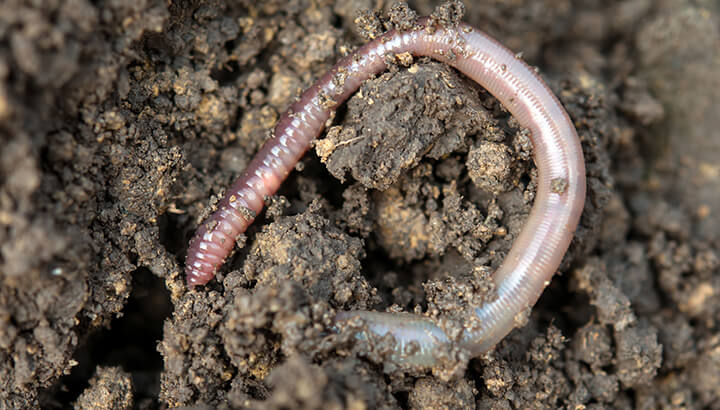
Some very interesting new dirt-related research is coming to the surface… and it has to do with hookworms. A study published this year in the journal Science Translational Medicine found that a hookworm protein administered to mice worked to ease their asthma symptoms. Other research has focused on the role of hookworms and combatting Crohn’s disease and other chronic conditions.
So, while it’s not advisable to find a hookworm and eat it (seriously, please don’t), proteins from these worms may someday be used to fight certain diseases. Soil and the creatures that inhabit it really are amazing!
All in all, when it comes to dirt, it’s okay to relax a little. You should still wash your hands, of course. But skip the antibacterial soap — regular will do. Natural cleaners are all you need for most cleaning. Vinegar, water, baking soda and lemon juice often do the trick just fine. Most importantly, get outside as often as you can. Get muddy! Grow some plants! If you get some dirt in your mouth, it’s okay… in fact, it’s probably doing you a favor.
– Tanya Mead


God I hate these articles advocating people to eat dirt. They’re based off misinformation, speculation, and misinterpretation of the literature. There are also plenty of studies showing soil microbes can be very harmful.
The “use natural cleaners” and “don’t eat hookworms” is about the only sound advice here.
I agree telling people to eat dirt is stupid. I disagree on the hookworms though. I was going to have to get a bowel resection and there was no indication if it was going to help my chronic gut inflammation and pain. I could hardly eat anything without getting sick and having to go liquid diet for days and then I decided I would rather try hookworms to see if I could calm the inflammation before getting surgery. I went through a giant hassle to get some shipped to Canada and drove up and inoculated myself with them. It took 3 months but now at 5 months post inoculation my gut does not bother me anymore. It has been kind of amazing how much they helped me.
There are probably safer ways to address that issue. Have you tried any probiotics or prebiotics previously?
Yes. The only probiotic that actually helped was Florastor (and it’s actually a yeast not a true probiotic) but the benefits seemed limited. None of the probiotics I tried had any effect at all and I tried a lot of them. My problems all started after one bout with diverticulitis. Just prior to that I had been on several years of antibiotics (on and off) for a chronic pain problem misdiagnosed as an infection. I got diverticulitis which cleared with Florastor and then about a year later a bout of Salmonella poisoning which came and went quickly and then two really bad bouts of 3 day 102 fevers in January and April. I scheduled a sigmoid colectomy that August but put it off due to work. Then things were on and off bad for about a year with some periods of intense inflammation without fever. My scans showed moderate uncomplicated diverticulits. I tried FMT with my brother but that did not help. I would have tried that approach more but it’s just hard to find a good donor and work out the logistics. I have to say at 5 months out I am the best I’ve been in years.
Any chance you could remember & list all the probiotics you tried?
>I tried FMT with my brother but that did not help
Interesting. I would love to hear more details on this as I’m in the process of finding a donor.
If you have a reddit account (or are willing to make one) it would be great if you posted all the details about your experience to /r/microbiome.
It’s not difficult or expensive. I did NOT test my brother for any pathogens. Maybe not smart but I picked him for that reason. I could trust he was healthy. FMT is just a roll up your sleeves deal beyond that. You have to buy some equipment but really nothing too bad. Finding a donor is the hard part. The logistics suck too. You have to coordinate someone else having a BM and picking it up then you have to retrieve the sample. Once you have it preparing an infusion is pretty easy. I must say the setup I used worked well. It is messy and unpleasant but so is having your colon removed and sh*****g into a bag for the rest of your life.
I tried Align, VSL#3, Culturelle and some others from Amazon. I tried some vegan ones. I made my own Sauerkraut. I am using Biofilm Defense right now too. Don’t ask me why or what made me try it but I started using it last month too and I think it may be helping or part of why I feel better. You have to be careful not to kill your hookworms so you need to be careful what you eat or take while hosting. I have avoided all antiboitics. I had a horrible cold last week and was coughing so hard I though I tore something lol . I was really afraid I would develop bronchitis and have to take antibiotics. I stopped taking them for the “diverticulitis” attacks and just went on bowel rest when I had a flare up. The results seemed to be the same. I have to say my bouts of intense pain and inflammation have gone away pretty much just in the last 6 weeks here. It used to be constant problems.