

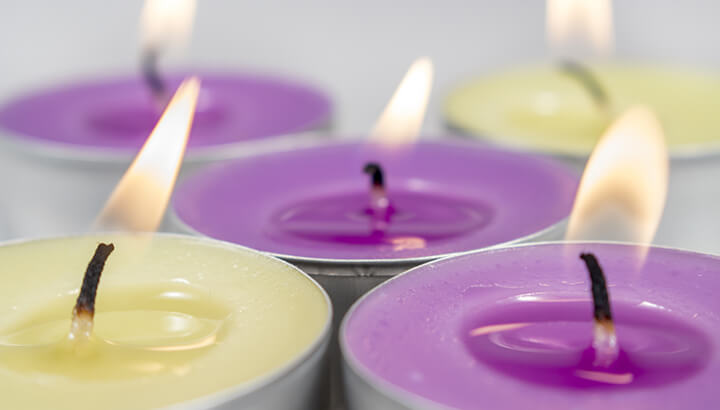
Oh, the art of candle making — how fun. I started making my own soy candles around two years ago, after I mastered the art of soap making (something that I will save for another day). I will, however, note that soap making is the reason why I’m so conscious and aware of the potential health dangers of candles.
For years now, I have been making organic soap for family and friends. I enjoy utilizing the beneficial, healing properties of carrier oils, butters and essential oils. It makes sense to source natural, organic ingredients when you’re placing them on your skin. But what about something like a candle? Why do the ingredients matter?
Whether you make your own candles or love to purchase new scents to scatter about your home, I want to address the issue surrounding synthetic fragrances, toxic waxes and even cored wicks — which may contain lead or tin. When you become more aware, you can make better choices, both for you and the environment.
Your candles may be toxic
Before I dive into the best options, it’s important to address the worst. The large majority of candles that you purchase today have been made based on low-quality standards. I think it’s pretty obvious why this is. The lower the quality, the higher a company’s profit margin. Made with a range of synthetic, potentially toxic materials, these candles can actually threaten your health.
Unlike essential oils, which are extracted from plants and other natural sources, scientists produce artificial scents in a lab. Approximately 95 percent of the chemicals in these fragrances are derived from petrochemicals. Unfortunately, petrochemicals are linked to increased cancer risk, birth defects and allergies.
What’s even more shocking is that when studied by the Environmental Working Group, more than 75 percent of products which listed the ingredient “fragrance,” the main ingredient in candles, contained harmful phthalates. These chemicals have been directly linked to hormone disruption, reduced sperm count, cancer and even possible fetal exposure to autism.
When you burn a candle that is laced with a range of chemical additives, you’re essentially creating indoor air pollution and breathing in toxic waste. It’s not just the fragrances which you need to be concerned about either. A number of studies document that the wax and wick also influence the level of air pollution.
Exclusive: Are You Breathing Toxic Air?
As stated by South Carolina State University, long-term exposure to the emissions from certain types of candles could be dangerous to human health, based on poor indoor air quality. The lead researcher placed different candles in an enclosed space designed to trap and test the emitted gas.
When researchers tested petroleum-based paraffin wax, they found undesired chemicals after burning. These included toluene, alkanes and alkenes — all known to harm human health. In comparison, vegetable-based soy candles did not produce toxic chemicals.
Which types of candles should I purchase?
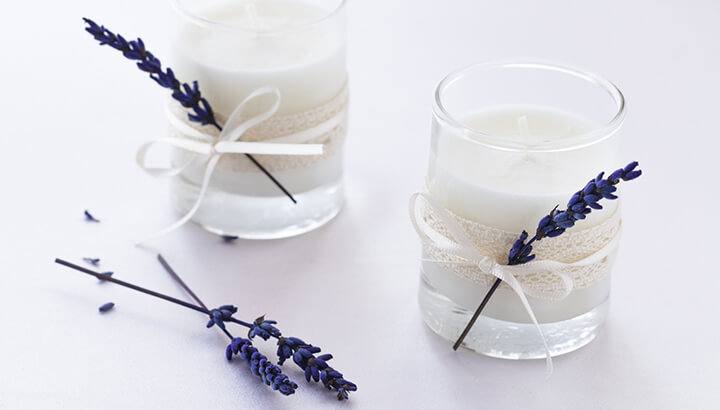
Not interested in making your own candles? There are plenty of local artisans who make soy-based, eco-friendly candle varieties. As mentioned, soy is the superior wax of choice. It burns clean, producing no toxins, pollutants or carcinogens. Not only is it healthier, but it burns cooler. This allows you to enjoy a candle for up to 50 percent longer than a paraffin candle. Typically they offer up to 70 hours of burning time.
It’s worth it to invest in a $30 candle made with soy wax and essential oils. When you purchase this type of candle, you’re benefiting from aromatherapy. By burning these types of quality candles, you can actually experience medicinal and therapeutic benefits.
Depending on the essential oils used, you will be able to achieve a range of desired effects. Lavender, for instance, promotes relaxation. Lemon essential oil can increase energy and improve concentration. Just remember, essential oils are the only plant-based, 100 percent natural scent. All other alternatives are synthetically produced by manufacturers.
Making your own candles
If you are making your own candles, source non-GMO soy wax, as well as a natural, non-cored wick made from cotton, hemp or wood. When you add essential oils, be aware of their flash point. This is the temperature at which a scent will combust when exposed to a flame. In this sense, some oils are more delicate than others.
Candle making is something that comes with practice, and I have learned many lessons along the way. When you become more experienced, you can have a lot of fun with candle making, creating candles that actually promote positive well-being. Sure, a $2 candle may seem like a steal, but when it comes to your health, you just can’t put a price on it.
Just like anything you purchase in terms of food or personal care products, quality does make a world of difference. When choosing a quality candle, not only will you benefit from a longer lasting, more enjoyable candle, but you will eliminate harmful air pollution. Treat yourself to a soy-based, aromatherapy candle to experience the difference.
— Krista Hillis


I’ve heard burning essential oils is also toxic… curious your thoughts on this.
Essential oils are flammable. Better off diffusing essential oils. Much better idea
The National Candle Association would like to weigh in on the safety of scented candles. First, the article mentions that products with the ingredient “fragrance” contain phthalates,
which have been linked to a series of health problems.
In many scented candles, very small amounts of blending agents are used to distribute the fragrance evenly throughout the wax. In some cases, the blending agent of choice is a phthalate
known as DEP (diethyl phthalate). DEP has been extensively studied and tested, and has a proven safety record spanning 50 years of widespread use in perfumes and personal care products. DEP should not be confused with DEHP, DBP or other phthlates commonly used to soften plastics and often referred to as “plasticizers.” If DEP is used in a scented candle, the amount is very small,
typically less than 1% of the candle. Given DEP’s proven safety, the very small amounts that might be used in a scented candle, and even smaller amounts that would escape combustion by the flame, consumers can be confident there are no health concerns if DEP is used in a scented candle.
Additionally, it is important to note that the mentioned study from South Carolina State University actually came from a slide presentation, not a scientific paper. It was never published
in a peer-reviewed journal, and its findings cannot be substantiated. When Dr. Massoudi first presented his findings, which contradicted the overwhelming body of scientific evidence on candle combustion, he provided no quantitative data, was never able to identify the candles he measured or their composition, and could not explain the presence of emissions not associated with candles.
Finally, the article states that soy is the safest wax for consumers to use. Internationally sponsored studies have been conducted on candles consisting of either soy wax, paraffin wax,
beeswax or other commonly used waxes. These studies have definitively shown that the combustion products of all common waxes are virtually identical. Therefore, the combustion products of soy wax are no different than that of paraffin wax. The levels of these combustion products emitted by all candles are well within safety standards when burning candles in the home under normal
conditions. For more information, please refer to a summary of the study here: http://candles.org/wp-content/uploads/2014/05/International-Study-Shows-All-Candle-Waxes-Burn-Alike.pdf.
The safety of scented candles is backed by decades of research, testing and a history of safe use, and the proven data is outlined in detail here: http://candles.org/research-studies/. In the future, if you or any of your colleagues have any questions regarding the candle industry, the National Candle Association would be happy to serve as a resource. Additional information can also be found at http://www.candles.org.
Carol Freysinger, Executive VP, National Candle Assn.