

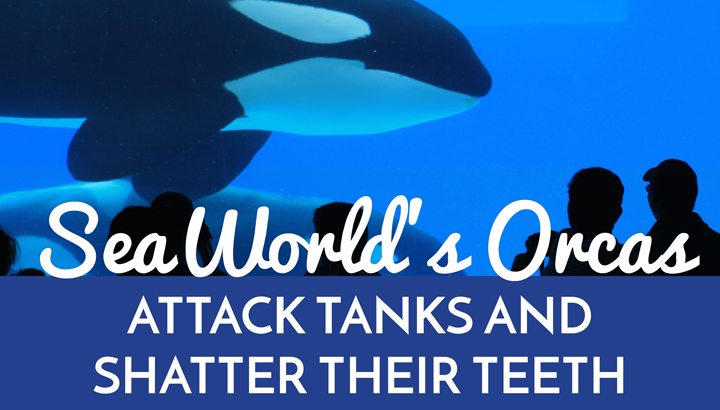
From time to time, everyone experiences some sort of dental pain in their life. But for SeaWorld’s captive orcas, who live with mouths full of shattered teeth ravaged by concrete and metal, dental pain is not only severe, but a daily way of life. Someday they may even succumb to infection.
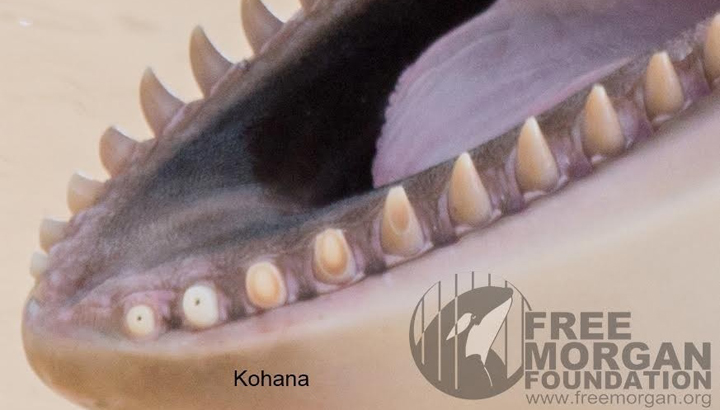
Shattered teeth and shattered lives
It’s well known that SeaWorld’s orcas living in captivity — both in the U.S. and abroad — chew on the concrete and metal walls of their tanks because of frustration and boredom. Yet, captors of these beautiful creatures refuse to admit that the animals are suffering daily under their care.
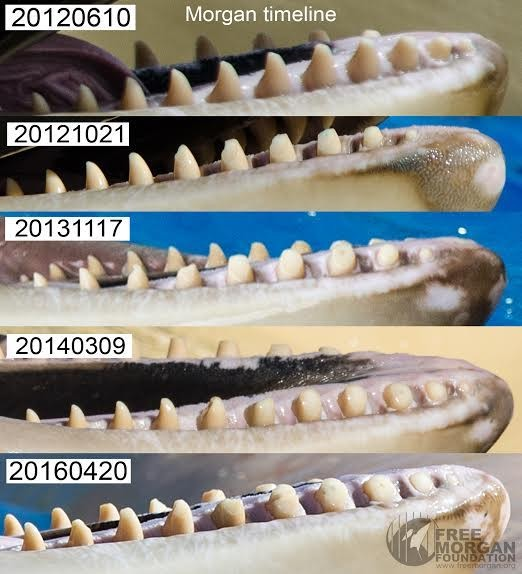
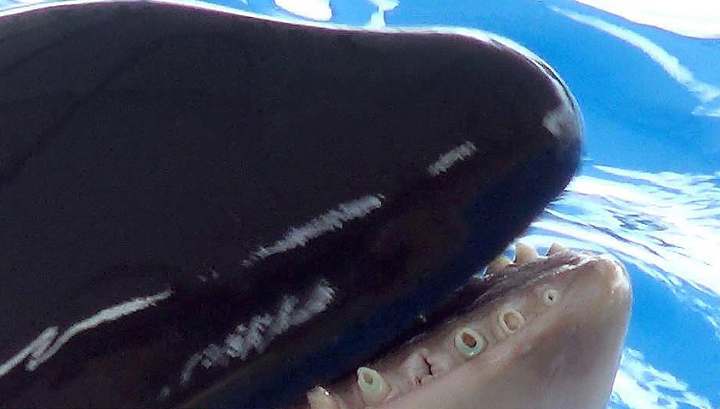
Photos released by the Free Morgan Foundation, a group cofounded by noted orca expert and marine biologist Dr. Ingrid Visser, show just how severe the damage is and how quickly it has happened.
“The images of the teeth in the report speak for themselves,” researchers wrote. “They are graphic, indisputable and universally recognizable as ‘painful’ to any human who has had a cavity, chipped, broken or lost a tooth, or had a tooth drilled by a dentist.”
The orca’s dental problems may seem superficial, but in reality, they can quickly become life threatening. Stressed and bored orcas compulsively gnaw on their tanks daily, which wear down their teeth, exposing pulp. Just like the teeth in your mouth, if exposed to pulp, deadly infection could easily take hold. Teeth are then drilled, similar to root canal, but without anesthesia. The result is a lifetime of pain and discomfort for the orcas, both from the initial wear and ongoing daily dental care, as well as the eventual collapse of the teeth.
Stolen freedom
The most apparent and startling damage is that of Morgan’s teeth, a 9-year-old female orca who was spotted swimming off the Dutch coast in 2010. At the time, she appeared to be ill, and was captured by the Harderwijk Dolphinarium on the grounds of rehabilitating her and then releasing her. But, instead of returning her to the wild, Morgan was transferred to Loro Parque in Spain through a series of shadowy moves, which critics describe as “orca laundering.” While SeaWorld claims ownership of her, she lives with five other orcas that SeaWorld loaned to the park.
The posted photos show just how severely Morgan’s teeth have been damaged in under four years of captivity. When she was captured, the orca had a complete healthy set of pointed teeth, as is normal for wild orcas. As of this past April, several of her front teeth were nearly missing from the wear and damage occurred in captivity.
On the park’s website, SeaWorld claims that damaged teeth are natural for orcas.
“Killer whales, like all toothed whales and dolphins, develop worn teeth,” they write. “And just like our killer whales, it’s a result of exploring and manipulating things in their environment.”
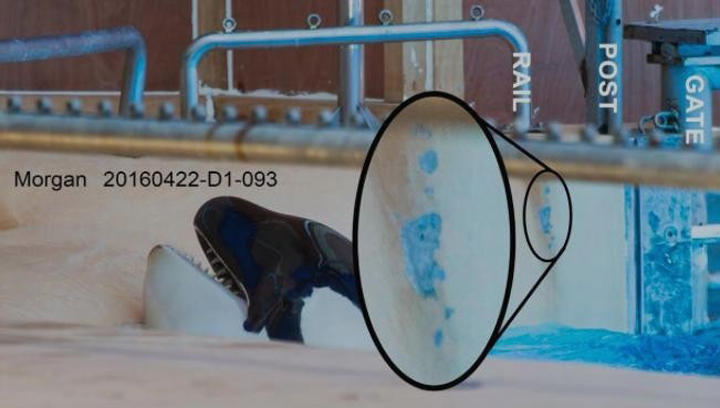
But you can clearly see from the photo that Morgan’s teeth are stained with blue paint — something that would never occur in a natural environment.
Let us know how you feel about orcas in captivity. If you’re against the practice, as many people are, then send amusement parks like SeaWorld a strong message suggests The Free Morgan Foundation, in a way that hurts their wallets — by not buying tickets!
— Katherine Marko


I have heard multiple reports of Morgan being deaf by the park officials however if Morgan is 9 years old and taken from the wild in 2010 then she spent 3 years in the wild. Due to this I do have a few theories to put out there discussing if her condition may be true or not.
1. She became deaf in the wild and couldn’t hunt for food. This is entirely possible as she may not be able to hear the sound bouncing off of the objects from her sonar. However this article shows that she was captured, possibly off the coast, meaning that she could still somewhat sense her surroundings (I think I saw reports that she was stranded on a beach however I don’t know if this is true or not, even so it is important to include this just in case I am wrong).
2. She became deaf in captivity. With the parks music being incredibly loud and with her being a wild Orca it’s possible that she had sensitive hearing and because of the music became deaf that way.
3. The staff could be lying or is not really sure that she is deaf. The park could be making up that she is deaf just to keep her at the park. This is certainly a possibility or could be a misdiagnosis of what she actually could have, if anything at all. It would make sense since that the veterinarians at Loro Parque are inexperienced with Orcas and other animals (with one vet shooting a man in a gorilla costume because he thought he was an actual gorilla, look at The Dodo on “Zoo Vet Mistakes Employee In Gorilla Suit For An Actual Ape, Shoots Him With Tranquilizer” for more information) However it may be the case that she cannot hear the trainers whistles because of the loud music.
Even with these theories however it is evident to see that if these Orca were human then it would be crystal clear to see that they are suffering in captivity. I think real vets with actual experience with Orcas should examine them without interference from the parks staff, because the vets at the park, even if they are good, could be completely influenced by bias and possibly lie when given the chance.
Another thing that just came to mind is that SeaWorld claims that they haven’t taken an Orca from the wild in 35 years however Morgan is on loan from SeaWorld and appears on their asset list, meaning that they are lying and that their words cannot be trusted.
Since writing the comment I have also thought about educating the vets at the parks (if they are inexperienced) by taking them to see wild Orcas for about 1 to 3 months and getting them to help with Orca and Dolphin strandings. This may change their perception on Cetaceans in captivity and may vote towards the rehabilitation and release of the animals.
Dental problems are common with captive orcas, due to the stresses of captivity. The issue is discussed at some length in David Kirby’s book “Death at SeaWorld.”
NO cetaceans belong in captivity. Ditto all wild animals in traveling circuses and carnivals. Legislation is in order.
BOYCOTT ALL SUCH SHOWS.